
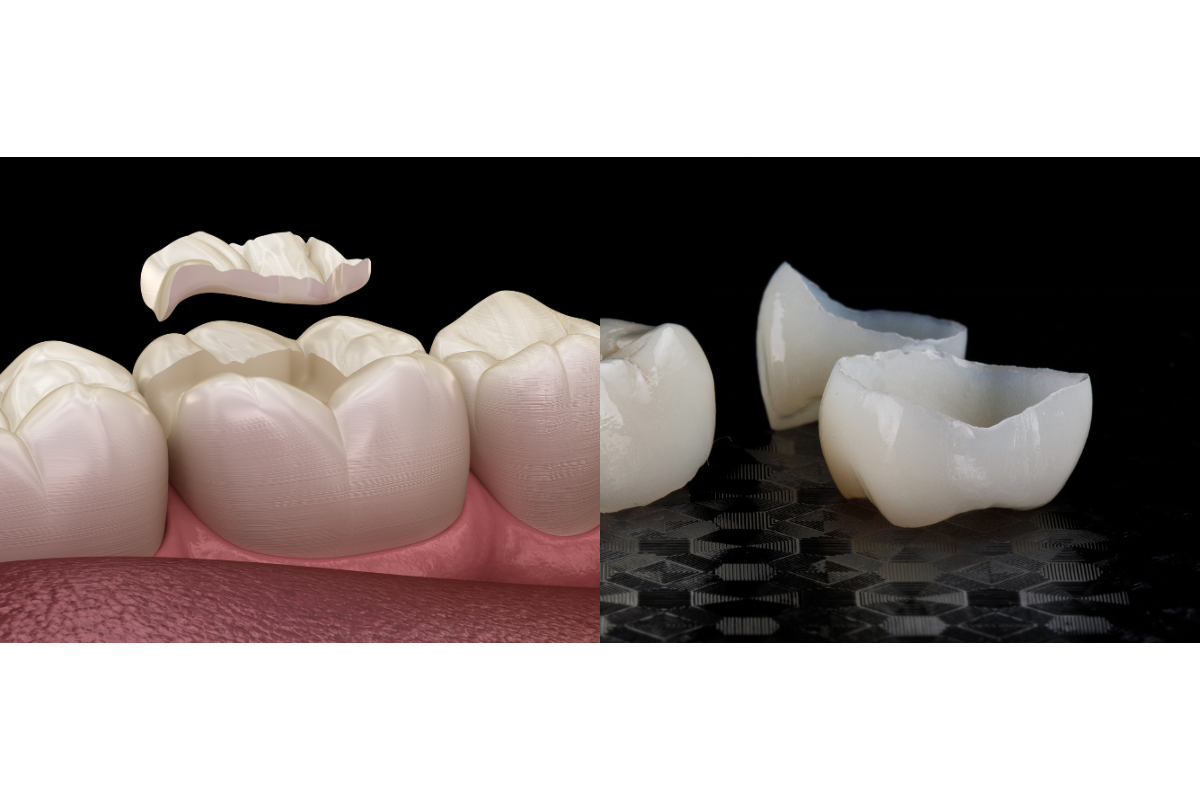
Onlay vs Crown: What’s the Difference?
Onlays and crowns are both dental restorations used to repair a tooth that has been damaged by decay, fracture, or significant wear. Although they serve a similar purpose, they differ in how much of the natural tooth they cover, how they are made, and the situations in which a dentist is likely to recommend one over the other. Knowing these differences makes it easier to understand a dentist’s recommendation and what to expect from either option. In cases where the damage goes beyond what either restoration can fix, dental implants available in Abu Dhabi often become the more realistic path forward.
What Is a Dental Onlay?
A dental onlay is a type of indirect restoration used when a tooth has more damage than a standard filling can address, but not enough to require full coverage. An onlay is custom-made, typically from porcelain, ceramic, or composite resin, and bonded onto the tooth to repair one or more cusps, the raised points on the chewing surface, while leaving the majority of the natural tooth structure intact.
Onlays are often placed in a single visit using digital scanning and milling technology, or over two visits if a dental laboratory is fabricating the restoration. Because an onlay preserves more of the natural tooth than a crown, dentists tend to recommend it whenever the remaining structure is strong enough to support it.
What Is a Dental Crown?
A dental crown, sometimes called a cap, covers the entire visible portion of a tooth above the gumline. Crowns are used when a tooth has extensive decay, a large or aging filling, a completed root canal, or a fracture that compromises the structure enough that a partial restoration would not hold up under normal biting force.
Like onlays, crowns can be made from porcelain, ceramic, zirconia, or metal alloys, depending on the location of the tooth and the patient’s preference. Because a crown replaces the entire outer surface of the tooth, it typically requires more of the natural tooth structure to be reduced during preparation compared to an onlay.
Key Differences Between Onlays and Crowns
- Coverage. An onlay covers one or more cusps of the tooth, while a crown covers the entire tooth above the gumline.
- Tooth structure removed. Onlays require less reduction of healthy tooth structure than crowns, since they are designed to fit around what remains.
- Best suited for. Onlays work well for moderate damage confined to the chewing surface. Crowns are used for more extensive damage, including teeth that have had root canal treatment.
- Strength and protection. Crowns generally offer more reinforcement for teeth with widespread damage, since they cover the entire tooth rather than a section of it.
- Cost. Onlays are typically less expensive than crowns due to the smaller amount of material and tooth preparation involved, though pricing varies by material and case.
- Longevity. Both restorations, when properly placed and cared for, can last ten to fifteen years or longer, depending on the material used and oral hygiene habits.
When Is an Onlay Recommended?
A dentist is more likely to recommend an onlay when:
- The damage is limited to the chewing surface of the tooth
- Enough healthy tooth structure remains to support a partial restoration
- A filling would be too large or would weaken the remaining tooth
- The patient prefers a more conservative approach that preserves natural tooth structure
When Is a Crown Recommended?
A dentist is more likely to recommend a full crown when:
- The tooth has extensive decay or a fracture affecting multiple surfaces
- The tooth has undergone root canal treatment and needs reinforcement
- A large portion of the tooth structure is already compromised by a previous restoration
- The tooth is at high risk of breaking under normal biting pressure without full coverage
How to Decide Between an Onlay and a Crown
Choosing between an onlay and a crown is not something a patient needs to determine alone. The decision depends on factors that are best assessed in person, including the extent of the damage, the amount of remaining healthy structure, and whether the tooth has had previous treatment such as a root canal. A consultation with the team at Al Bahri Dental & Orthodontic Center typically includes an examination and X-ray to confirm which restoration will hold up best over time.
When an Onlay or Crown Isn’t Enough: Considering Dental Implants in Abu Dhabi
In some cases, the damage to a tooth extends beyond what an onlay or crown can repair. If the roots are compromised, the tooth is fractured below the gumline, or there is not enough healthy structure left to support a restoration, extraction followed by tooth replacement may be the more realistic option. Patients who need dental implant treatment in Abu Dhabi typically start with an evaluation of the surrounding bone and overall oral health to confirm implant placement is a suitable option, followed by planning and placement as part of a complete tooth replacement plan.
Conclusion
An onlay and a crown both restore a damaged tooth, but they are suited to different levels of damage and preserve different amounts of natural tooth structure. An onlay is typically the more conservative option for moderate damage, while a crown provides fuller protection for a tooth that has been significantly compromised. Al Bahri Dental & Orthodontic Center provides a full range of restorative options, from onlays and crowns to dental implant options in Abu Dhabi, so each tooth is treated with the least invasive option that still protects long-term oral health. A qualified dentist can confirm the best approach after an examination. Book your appointment today. Visit albahridental.com, call +971 2 575 1856 (Abu Dhabi) or +971 3 764 3273 (Al Ain), or WhatsApp us at +971 56 343 1856.
FAQs
How long do onlays and crowns typically last?
With proper care, both restorations can last ten to fifteen years or longer, depending on the material used, the position of the tooth, and oral hygiene habits.
Is getting an onlay more affordable than a crown?
Generally, yes. Onlays require less material and less tooth reduction, which usually makes them less expensive than a full crown, although exact pricing depends on the material and the complexity of the case.
Does getting an onlay or crown hurt?
The procedure is performed under local anesthesia, so discomfort during placement is minimal. Some sensitivity is common for a few days afterward, particularly with temperature changes.
Can an onlay be upgraded to a crown later if the tooth worsens?
Yes. If a tooth with an existing onlay develops further damage, a dentist can remove the onlay and prepare the tooth for a full crown.
Can an onlay or crown replace a missing tooth?
No. Onlays and crowns repair or reinforce a tooth that is still present. If a tooth is missing entirely or must be extracted, dental implants from clinics in Abu Dhabi can be used to replace it with a functional, permanent alternative.
How do I know which restoration is right for my tooth?
An in-person examination, often including an X-ray, is the most reliable way to determine how much healthy tooth structure remains and which restoration will provide the best long-term result.

