

Why You Should Never Ignore Bleeding Gums, Even When It Doesn’t Hurt
Most people see a little pink in the sink after brushing and think nothing of it. You brush a bit harder than usual, you switch toothbrushes, and it goes away, or so the reasoning goes. But here is the thing: healthy gums do not bleed. Full stop. If yours do, your mouth is telling you something your painless routine has been hiding.
Bleeding gums are one of the most common symptoms patients mention to dentists, and one of the most commonly dismissed. Understanding what actually causes them, and what happens when they are left untreated, is worth your full attention, particularly if you are overdue for a visit to one of the dentists in Abu Dhabi.
What Causes Gums to Bleed?
The single most common cause is gingivitis, the earliest stage of gum disease. Gingivitis occurs when plaque, the bacterial film that forms on teeth daily, is not removed consistently through brushing and flossing. The bacteria in plaque produce toxins that irritate the gum tissue, causing inflammation, redness, swelling, and bleeding.
The important distinction to understand is that gingivitis is reversible. The same cannot be said for its successor.
When gingivitis is left unaddressed, it can progress to periodontitis, a deeper and more destructive infection that attacks the bone and connective tissue holding your teeth in place. The World Health Organisation estimates that severe periodontal disease affects nearly 19 percent of the global adult population, making it one of the most widespread chronic diseases in the world. At this stage, treatment becomes significantly more involved, and the damage cannot always be fully undone.
Beyond plaque, bleeding gums can also be triggered by:
- Hormonal changes: Pregnancy, puberty, and menopause can all increase gum sensitivity and susceptibility to inflammation, a condition sometimes called pregnancy gingivitis.
- Medications: Blood thinners such as warfarin and aspirin, as well as certain antihypertensives and anticonvulsants, can make gums more prone to bleeding or cause gum overgrowth.
- Vitamin deficiencies: Both Vitamin C deficiency (historically associated with scurvy) and Vitamin K deficiency can contribute to gum bleeding. These are rare in the modern world but not unheard of.
- Poorly fitted dental appliances: Dentures, retainers, or orthodontic brackets that don’t fit correctly can chronically irritate the gum tissue.
- Systemic health conditions: Diabetes, blood disorders, and autoimmune conditions can all manifest with oral symptoms, including bleeding gums.
The Systemic Connection: Why This Goes Beyond Your Mouth
One of the most important shifts in modern dentistry over the past two decades has been the recognition that oral health and overall health are not separate concerns. The mouth is not isolated from the rest of the body, and the inflammation happening in infected gum tissue does not stay local.
Cardiovascular Disease
Multiple studies, including a significant body of research published in the Journal of the American Heart Association, have found associations between periodontal disease and increased risk of cardiovascular disease. The proposed mechanism involves oral bacteria entering the bloodstream through inflamed gum tissue and contributing to arterial inflammation and plaque formation. While the relationship is correlational rather than definitively causal, the link is strong enough that cardiologists and dentists increasingly coordinate care.
Diabetes
The relationship between gum disease and diabetes is bidirectional. People with uncontrolled diabetes are more susceptible to infection, including periodontal disease. Conversely, chronic periodontal inflammation can make blood sugar harder to regulate, creating a cycle that worsens both conditions. Managing gum disease has been shown in clinical studies to contribute to improved glycaemic control in diabetic patients.
Adverse Pregnancy Outcomes
Research published in the Journal of Periodontology has found associations between untreated periodontal disease during pregnancy and increased risk of preterm birth and low birth weight. Pregnant women are already at heightened risk for gum disease due to hormonal changes, which makes dental care during pregnancy especially important and not something to defer.
Respiratory Health
Oral bacteria aspirated into the lungs can contribute to respiratory infections, including pneumonia. This risk is elevated in older adults and people with compromised immune systems, but it underscores the reality that what lives in your mouth does not stay there.
Common Myths That Keep People From Seeking Help
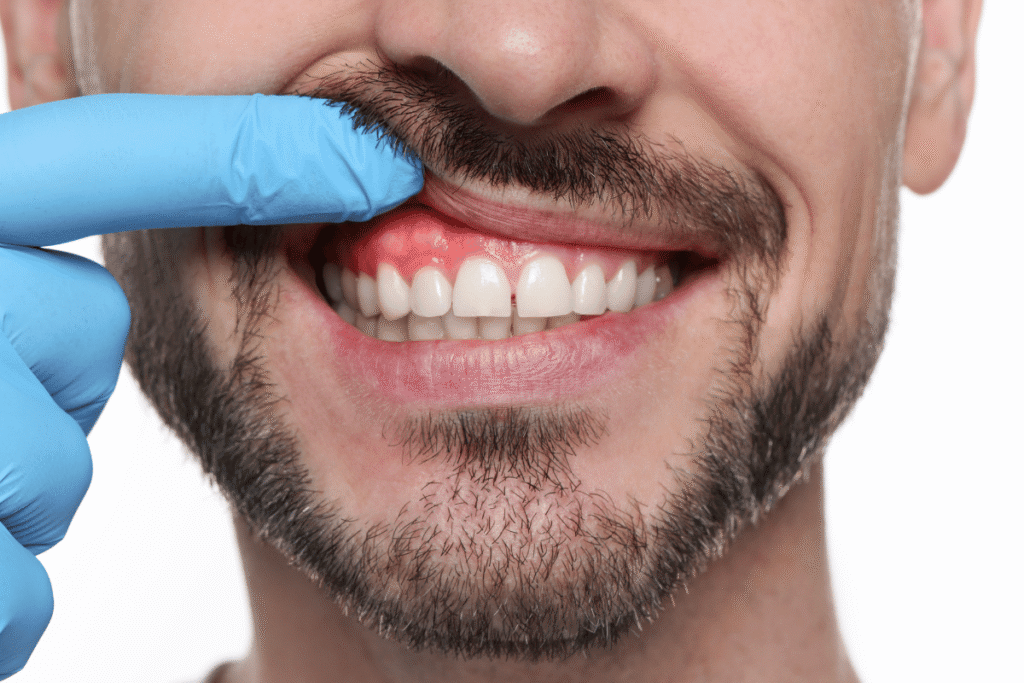
Despite how much is now understood about the risks of gum disease, several persistent myths keep people from getting the care they need:
“It doesn’t hurt, so it can’t be serious.”
Gum disease is notorious for progressing silently. Pain is a late-stage symptom, and by the time significant discomfort appears, meaningful bone loss may have already occurred. The absence of pain is not reassurance. It is one of the primary reasons this condition goes undetected for so long.
“Bleeding is normal if I haven’t flossed in a while.”
Flossing should not cause bleeding in healthy gums. If yours bleed when you first resume flossing after a break, that is evidence of existing inflammation, not a sign that that you simply need to toughen up your gums. Consistent flossing will reduce bleeding in healthy tissue over about two weeks as inflammation resolves, but persistent bleeding beyond that warrants a professional assessment.
“I can fix it by brushing harder.”
Aggressive brushing does not remove the cause of gum disease and can actually make things worse by stripping enamel and causing gum recession. Technique matters far more than pressure. A soft-bristled toothbrush used correctly is significantly more effective and safer than a hard-bristled one used vigorously.
What Professional Treatment Looks Like
The good news is that when caught at the gingivitis stage, gum disease is completely reversible with professional care and improved home habits.
A professional cleaning (prophylaxis) removes the hardened tartar (calculus) that brushing and flossing cannot touch, and that is the foundation of ongoing inflammation. Your dentist or hygienist will also assess probing depths around each tooth to identify any pockets where infection is developing.
For more advanced gum disease, scaling and root planing (a deeper clean that reaches below the gumline) is often the first step. In cases where bone loss has occurred, a periodontist may recommend surgical intervention to restore the affected structures. The important thing is that none of this can happen until you come in.
What You Can Do Starting Today
- Brush for a full two minutes, twice daily, with a soft-bristled toothbrush
- Floss or use an interdental cleaner once every day. There is no substitute for cleaning between teeth
- Use a fluoride toothpaste and, if your dentist recommends it, an antibacterial mouthwash
- Replace your toothbrush every three months, or sooner if the bristles are splayed
- Schedule professional cleanings at least twice a year, and more frequently if you have a history of gum disease, are diabetic, or are pregnant
- Do not smoke, as tobacco use is one of the most significant risk factors for periodontal disease and significantly slows healing after treatment
The Honest Bottom Line
Bleeding gums are not a cosmetic issue. They are a clinical sign of infection and inflammation that, left unchecked, can cost you teeth, complicate your systemic health, and require increasingly complex treatment over time. The earlier you address it, the simpler, cheaper, and more effective the solution.
If you have been putting this off, this is the nudge you needed.
The dentists in Abu Dhabi are not just technically skilled. They take the time to listen, assess the full picture, and explain your options clearly. At Al Bahri Dental, you will find a team committed to genuinely thorough care, from routine cleanings to the management of complex gum conditions. Do not wait for it to hurt. Book your appointment today and take the first step toward a healthier mouth and a healthier you.

