
Are There Different Types of Dental Fillings? A Complete Guide
If your dentist has told you that you need a filling, one of the first questions that comes to mind is: what kind? Most patients assume there is only one option. In reality, dental fillings come in several materials, each with different properties, aesthetics, costs, and clinical applications. The right choice depends on where the cavity is, how large it is, your bite pressure, your aesthetic preferences, and your budget.
At Al Bahri Dental and Orthodontic Centre, we are recognised among the dentists in Abu Dhabi for providing honest, patient-centred guidance on exactly these kinds of decisions. This guide covers every type of dental filling available today, how each one works, and how to know which is right for you.
Why Fillings Are Necessary
A cavity forms when bacteria in the mouth produce acid that erodes tooth enamel over time. Left untreated, the decay progresses deeper into the tooth, eventually reaching the pulp and necessitating more complex treatment such as a root canal or extraction. A filling stops that progression by removing the decayed tissue and sealing the cavity with a restorative material.
Fillings are also used to repair cracked or broken teeth and to restore teeth that have been worn down through habits like teeth grinding (bruxism) or nail biting.
The Six Main Types of Dental Fillings
1. Composite Resin Fillings
Composite resin is the most commonly used filling material in modern dental practice and the most requested among patients seeking a natural result.
Composite is a mixture of plastic resin and fine glass particles that bonds directly to the tooth structure. It is applied in layers, each cured with a special blue light, and then shaped and polished to match the surrounding enamel. The result is a restoration that is virtually invisible.
Advantages:
- Closely matches natural tooth colour and translucency
- Bonds directly to the tooth, requiring less removal of healthy tooth structure than amalgam
- Can be used on both front and back teeth
- Repairable if damaged
Considerations:
- Less durable than amalgam under heavy chewing pressure over the long term
- May stain over time with coffee, tea, or red wine
- Takes longer to place than amalgam due to the layering process
- Slightly higher cost than amalgam
Composite resin is the standard recommendation at Al Bahri Dental for most anterior (front) cavities and small to medium posterior (back) cavities where aesthetics matter.
2. Amalgam Fillings
Dental amalgam has been used for over 150 years and remains one of the most durable filling materials available. It is an alloy composed primarily of silver, tin, copper, and mercury. The mercury in amalgam is bound within the alloy and is clinically considered safe by major health authorities including the WHO and the American Dental Association, though some patients prefer to avoid it for personal reasons.
Advantages:
- Extremely durable, particularly under heavy chewing pressure on back teeth
- Resistant to wear
- Less technique-sensitive to place
- Lower cost than tooth-coloured options
Considerations:
- Highly visible silver-grey colour
- Requires more removal of healthy tooth structure to create mechanical retention
- Can cause slight tooth discolouration over time
- Some patients have personal preferences against mercury-containing materials
Amalgam is still used in specific clinical situations where durability is the priority and aesthetics are less relevant, such as large cavities on molars in patients with heavy bite forces.
3. Ceramic (Porcelain) Fillings
Ceramic fillings, often called inlays or onlays depending on their size and placement, are fabricated in a dental laboratory or with in-clinic CAD/CAM technology and then bonded to the tooth. Porcelain closely mimics the appearance of natural enamel, including its translucency.
Advantages:
- Highly aesthetic, indistinguishable from natural tooth structure in most cases
- Resistant to staining
- Durable and biocompatible
- A good option for patients with metal sensitivities
Considerations:
- Higher cost than composite or amalgam
- More brittle than metal options and can fracture under extreme pressure
- Requires at least two appointments in traditional lab-fabricated cases (one to prepare, one to fit)
Ceramic restorations are an excellent long-term investment for patients who want durability combined with premium aesthetics, particularly for larger cavities on visible teeth.
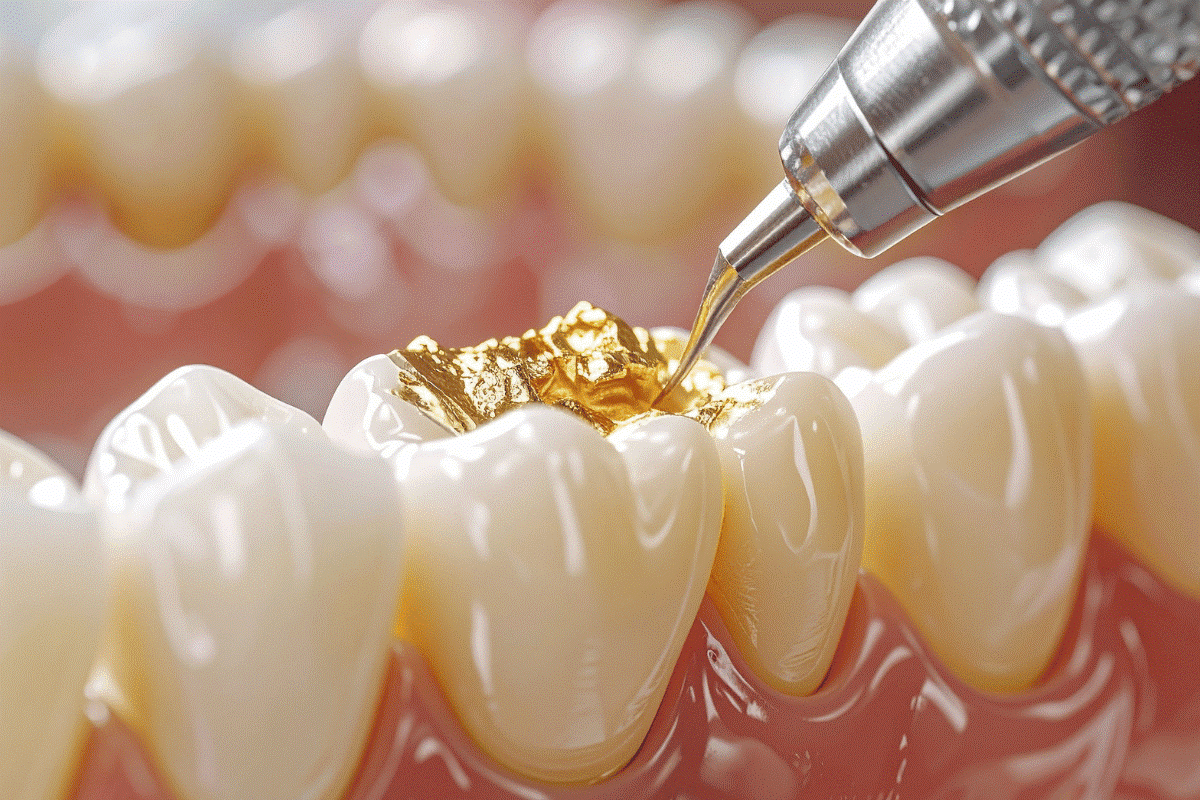
4. Gold Fillings
Gold inlays and onlays are among the most durable restorations in dentistry. A well-placed gold restoration can last 15 to 30 years or longer with proper care. They are fabricated in a dental laboratory from a gold alloy and cemented into place.
Advantages:
- Exceptional durability and longevity
- Extremely well-tolerated by gum tissue
- Does not corrode
- Can withstand significant chewing forces
Considerations:
- High cost
- Highly visible due to gold colour
- Requires at least two appointments
- Less commonly requested in modern practice due to aesthetic preferences
Gold restorations remain the gold standard in terms of clinical longevity, and some patients specifically request them for posterior teeth where aesthetics are not a concern.
5. Glass Ionomer Fillings
Glass ionomer cement is a tooth-coloured material that bonds chemically to the tooth and releases fluoride over time, helping to prevent further decay in the surrounding enamel. It is less durable than composite resin and is generally used in lower-stress areas.
Advantages:
- Releases fluoride, providing ongoing protection against secondary decay
- Bonds chemically without the need for adhesive agents
- Good option for children’s baby teeth
- Suitable for cavities at or below the gum line
Considerations:
- Less durable than composite or amalgam
- More prone to wear and fracture
- Less aesthetic than composite
Glass ionomer is commonly used in paediatric dentistry, for root surface cavities in adults, and as a liner or base beneath other restorations.
6. Resin Ionomer Fillings
Resin ionomer is a hybrid material combining properties of glass ionomer and composite resin. It retains the fluoride-releasing property of glass ionomer while offering improved aesthetics and slightly better durability. It sits between glass ionomer and composite resin in terms of strength and is used in similar clinical situations where fluoride release is beneficial but a better aesthetic result is also needed.
How to Choose the Right Filling
The filling for any individual patient depends on several clinical and personal factors. Your dentist will consider:
| Factor | How It Influences the Choice |
| Location of the cavity | Front teeth prioritise aesthetics; back teeth require durability |
| Size of the cavity | Larger cavities may require inlays, onlays, or crowns rather than direct fillings |
| Bite pressure | Patients with bruxism or heavy bites need highly durable materials |
| Aesthetic preference | Tooth-coloured options for visible areas |
| Patient age | Children’s teeth may benefit from glass ionomer’s fluoride release |
| Allergies or sensitivities | Metal allergies make ceramic or composite the appropriate choice |
| Budget | Costs vary significantly between material types |
The dentists in Abu Dhabi do not recommend a single filling material for every patient. They assess each cavity individually and present options with clear explanations of the trade-offs. That is the standard of care at Al Bahri Dental.
What to Expect During a Filling Procedure
For most direct fillings (composite, amalgam, glass ionomer), the procedure is completed in a single appointment:
- Local anaesthetic is administered to numb the area
- The decayed tissue is removed using a dental drill or laser
- The cavity is cleaned and prepared
- For composite fillings, a bonding agent is applied before the material is placed in layers
- Each layer is cured with a UV light
- The filling is shaped and polished to match your bite and adjacent teeth
Indirect restorations (ceramic inlays, gold inlays) require two appointments: one to prepare the tooth and take impressions, and a second to fit and cement the final restoration.
Post-procedure sensitivity is normal and typically resolves within a few days to two weeks. If sensitivity persists beyond this, contact your dentist.
How Long Do Fillings Last?
Filling longevity depends on material, size, location, and oral hygiene habits:
| Material | Average Lifespan |
| Amalgam | 10 to 15 years |
| Composite resin | 5 to 10 years |
| Ceramic (porcelain) | 10 to 15 years |
| Gold | 15 to 30 years |
| Glass ionomer | 3 to 5 years |
Regular dental check-ups allow your dentist to monitor fillings for wear, cracking, or secondary decay developing at the margins. Catching a failing filling early prevents more extensive treatment later.
Replacing Old Fillings
Fillings do not last forever. Signs that a filling may need replacing include:
- Sensitivity or pain when biting
- A visible crack or fracture in the filling
- A rough edge you can feel with your tongue
- Discolouration or staining around the filling margin
- Pain or sensitivity to hot and cold that persists
Patients with old amalgam fillings sometimes ask whether they should replace them with tooth-coloured alternatives. The answer depends on the condition of the existing filling. If it is intact and functioning well, replacing it purely for aesthetics carries a small risk to the tooth. If it is showing wear or marginal breakdown, replacement with composite or ceramic is a sound clinical and aesthetic decision.
The dentists in Abu Dhabi will assess your existing restorations at every check-up and advise replacement only when it is clinically warranted.
Book Your Dental Assessment at Al Bahri
Whether you have been told you need a filling, want to replace an old restoration, or simply want a thorough check-up and honest advice, Al Bahri Dental and Orthodontic Center is here to help.
As trusted dentists in Abu Dhabi, our team provides restorative, cosmetic, orthodontic, and preventive dental care across two conveniently located clinicsin Abu Dhabi and Al Ain.
Abu Dhabi: Khaleej Al Arabi Street, Building 836
Al Ain: Zayed Bin Sultan St, Town Center
Call us at +971 2 575 1856 (Abu Dhabi) or +971 3 764 3273 (Al Ain), or book an appointment online.
Your smile deserves the right care, from the right team.
Frequently Asked Questions
Do fillings hurt?
The procedure itself is performed under local anaesthetic and should be painless. Mild sensitivity after the anaesthetic wears off is normal and typically resolves within a few days. Deep fillings close to the nerve may cause more prolonged sensitivity.
Can I eat after a filling?
With composite resin fillings, you can eat as soon as the anaesthetic wears off, as the material is cured immediately during the procedure. With amalgam fillings, it is advisable to wait at least 24 hours before eating hard foods on the filled side to allow the material to fully harden.
How do I know if I need a filling or a root canal?
A filling is appropriate when decay is confined to the enamel and dentine and has not reached the pulp. If the decay has extended to the pulp, a root canal is necessary before restoration. Symptoms such as spontaneous pain, prolonged sensitivity, or swelling suggest the decay may have reached the pulp and should be assessed promptly.
Are tooth-coloured fillings as strong as amalgam?
Modern composite resin has improved significantly in strength, and for small to medium cavities, it performs comparably to amalgam in most patients. For very large cavities or patients with heavy bite forces, ceramic or gold inlays offer superior durability. Your dentist will advise based on your specific clinical situation.
How often should I have my fillings checked?
At every routine dental check-up, which should be at least once every six months. Regular X-rays allow your dentist to detect secondary decay beneath or around existing fillings before it becomes symptomatic.
What makes Al Bahri Dental different for restorative treatment?
As among the dentists in Abu Dhabi for restorative dentistry, our team takes time to explain every option, present the clinical rationale for each recommendation, and ensure patients feel confident in their treatment decisions. We offer the full range of filling materials and use digital imaging to support accurate diagnosis and treatment planning.

