Restorative Dentistry

Ceramic Inlays: A Conservative & Long-Lasting Solution
Ceramic Inlays: A Conservative & Long-Lasting Solution Home / If you have a damaged back tooth that is too large for a filling but not
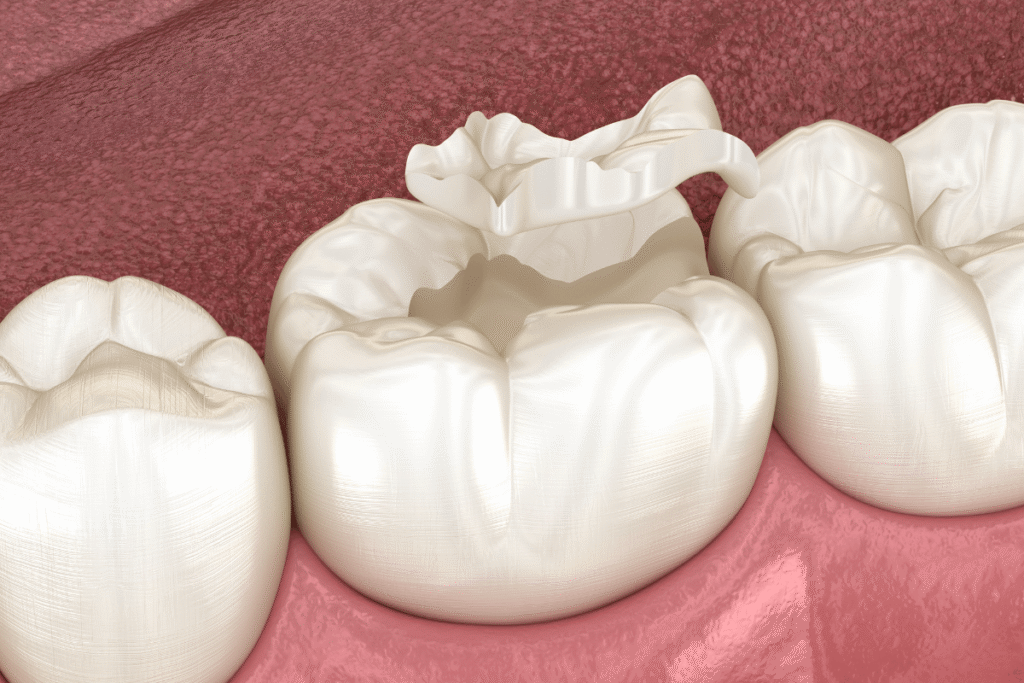
If you have a damaged back tooth that is too large for a filling but not damaged enough for a crown, a ceramic inlay is often the most conservative option available. Ceramic inlays repair the tooth while preserving as much of your natural structure as possible, which is one reason they have become a standard part of prosthodontics services in Abu Dhabi over the past two decades. This guide explains what ceramic inlays are, how they compare to fillings and crowns, and what to expect if your dentist recommends one.
At Al Bahri Dental and Orthodontic Center, our prosthodontics services in Abu Dhabi are led by Dr. Rami Albahri, a US and Canadian double board-certified prosthodontist specializing in prosthodontics, facial esthetics, and full-mouth restoration, working alongside CEO and founder Dr. Samih Al-Bahri, who has practiced dentistry in the UAE for over 40 years.
An inlay is an indirect restoration, meaning it is custom-made in a dental laboratory rather than shaped directly in your mouth, and then bonded into place over a follow-up visit. Inlays fit within the grooves of a tooth, between the cusps, which distinguishes them from onlays, which extend over one or more cusps to cover a larger area. Ceramic inlays are tooth-colored, made from porcelain or glass-ceramic materials, and bonded to the tooth using resin cement and acid-etch techniques that create a strong seal between the restoration and the remaining natural structure.
The word conservative in dentistry refers to how much healthy tooth structure a treatment preserves. Traditional metal fillings can reduce a tooth’s strength by up to 50 percent, since the material does not bond to the tooth and instead relies on the cavity shape alone for retention. Ceramic inlays work differently. Because they are bonded rather than simply packed into a cavity, they can actually increase the strength of the remaining tooth by up to 75 percent compared to an unrestored, weakened tooth. This is a key reason ceramic inlays are recommended so often within prosthodontics services in Abu Dhabi for patients who want to avoid the more extensive preparation a full crown requires.
| Option | Tooth structure removed | Best suited for |
|---|---|---|
|
Composite filling
|
Minimal |
Small to medium cavities
|
|
Ceramic inlay |
Moderate, bonded |
Larger cavities within the cusps |
|
Ceramic onlay |
Moderate, bonded
|
Cavities extending over one or more cusps
|
|
Full crown |
Most extensive |
Severely damaged or weakened teeth |
An inlay sits in the middle of this spectrum. It handles cavities too large for a filling to restore predictably, without requiring the significant tooth reduction that a crown involves.
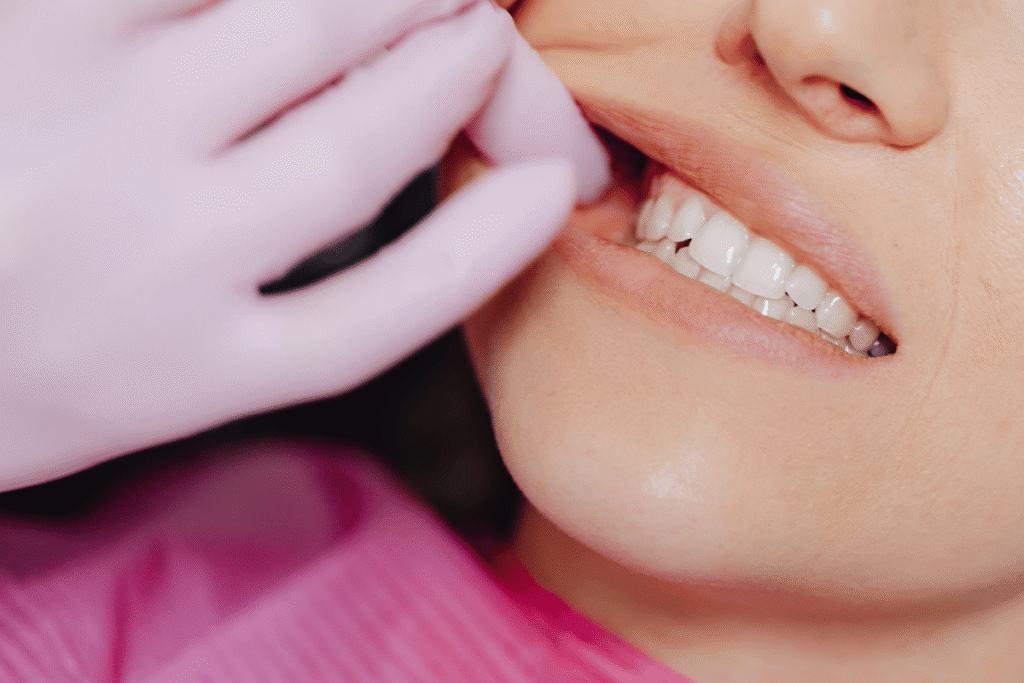
Ceramic inlays are built to last, though their lifespan depends on placement, bite forces, and how well the restoration is cared for. Long-term studies have tracked ceramic inlay and onlay survival at 84 percent after 12 years and 76 percent after 15 years, figures that compare favorably with many other restorative options. Where inlays do fail, it is usually due to cohesive fracture within the ceramic itself or marginal wear at the edges over many years, both of which a dentist can monitor at routine check-ups.
Ceramic inlays work best for teeth with moderate decay or old, failing fillings that need replacement, particularly in the back teeth where chewing forces are highest. They are not typically recommended for teeth under heavy occlusal stress or for patients who grind their teeth without a protective night guard, since ceramic can be more prone to fracture under repeated high-impact pressure. A dentist will evaluate the remaining tooth structure, the extent of decay, and your bite pattern before recommending an inlay over a filling or crown. This kind of individualized assessment is standard practice across prosthodontics services in Abu Dhabi, since the right restoration depends heavily on each patient’s specific situation.
The process typically takes two visits. During the first, the damaged portion of the tooth is removed, an impression or digital scan is taken, and a temporary restoration is placed while the ceramic inlay is fabricated. At the second visit, the temporary is removed, and the custom inlay is bonded into place using resin cement, then checked and adjusted for a precise bite. Patients considering prosthodontics services in Abu Dhabi for a damaged tooth can expect the entire process, from consultation to final bonding, to be completed within one to two weeks.
Did you know: ceramic inlays owe much of their durability to the same acid-etch bonding technology developed for orthodontic brackets decades ago, adapted for restorative dentistry as adhesive materials improved through the 1990s and 2000s.
A ceramic inlay offers a way to repair a damaged tooth without sacrificing more healthy structure than necessary, backed by decades of clinical data on its durability. If you think you may need one, booking a consultation is the best way to find out whether an inlay, onlay, or another restoration is right for your specific tooth.
The procedure is performed under local anesthesia, similar to a filling, so patients typically do not feel pain during placement. Mild sensitivity for a few days afterward is normal.
Research shows survival rates of around 84 percent at 12 years and 76 percent at 15 years, though individual results depend on oral hygiene, bite forces, and regular dental visits.
For larger cavities, yes. Ceramic inlays are bonded to the tooth and can increase its strength, while metal fillings are not bonded and can weaken the tooth over time.
Yes. Ceramic is tooth-colored and can be shade-matched to blend with surrounding teeth, unlike metal restorations.
Coverage varies by provider and plan. Al Bahri Dental works with a number of insurance partners and can help verify your coverage before treatment begins.
Ceramic Inlays: A Conservative & Long-Lasting Solution Home / If you have a damaged back tooth that is too large for a filling but not
Why Do You Have Bad Breath Even After Brushing Home / If your breath still smells bad minutes after brushing, the cause is usually hiding

Why a Play Area Matters at the Pediatric Dentist Home / For most adults, a dental visit is a manageable inconvenience. For a young child,